This post contains affiliate links. As an Amazon Associate, bananfew earns from qualifying purchases. bananfew may also earn a commission from other partner links below at no extra cost to you. See the affiliate disclosure.
Your credit score can stay stuck even when you pay every bill on time, and a high credit utilization rate is often the reason. The good news is it’s one of the quickest parts of your score to improve, because it mostly looks at your latest balances.
Key takeaways
- Credit utilization is how much of your credit card limits you’re using, shown as a percent.
- The balance on your statement is usually what gets reported, so paying before the statement closes can lower your rate.
- Under 30% is a common target, and lower is better, but on-time payments still matter most.
What Credit Utilization Means (and Why It Matters)
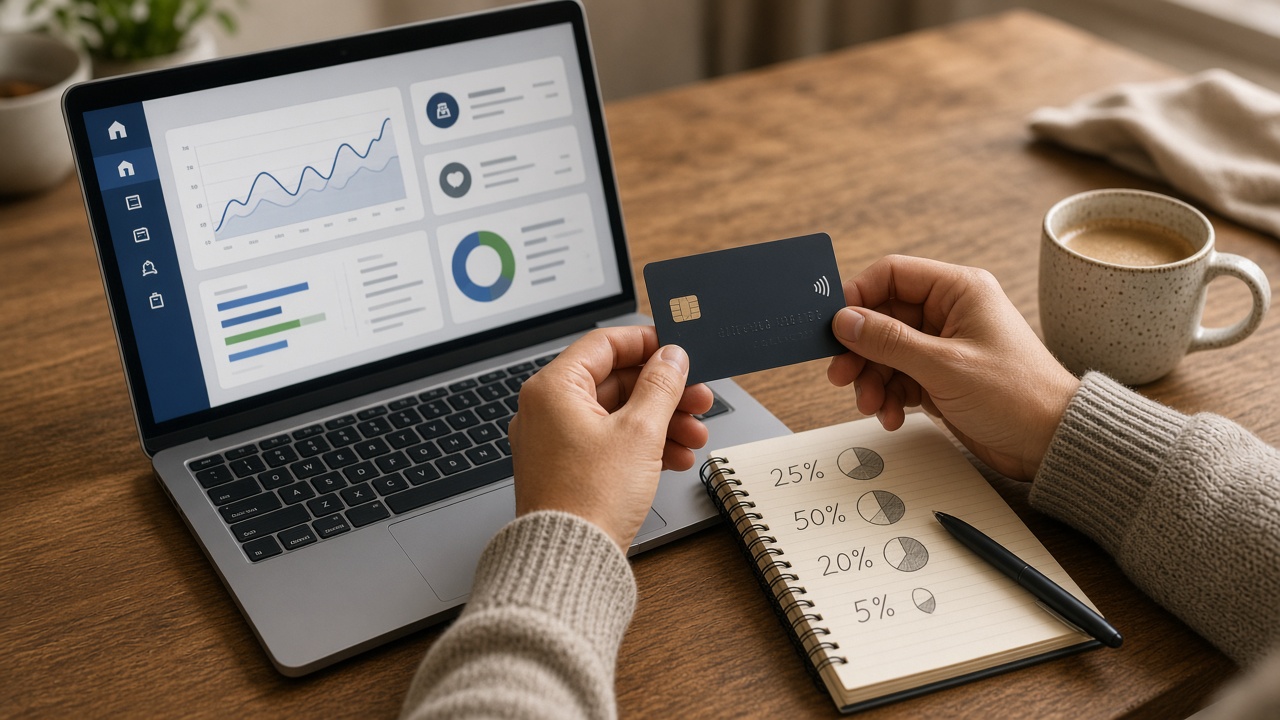
Credit utilization is your credit card balances divided by your credit limits. If you owe $1,000 on a card with a $4,000 limit, you’re using 25% of it.
It’s part of the “amounts owed” category, which makes up about 30% of a FICO Score, according to myFICO. Only payment history counts for more. FICO also looks at your overall rate and your highest rates on individual cards, so one maxed-out card can hurt even if your total looks fine.
The Consumer Financial Protection Bureau says many experts suggest using less than 30% of your total limit, and people with the highest scores often use less than 10% (CFPB). The same page notes you don’t need to carry a balance to build a good score.
How to Figure Out Your Credit Utilization Ratio
You only need two numbers per card: the balance and the credit limit. Both are on your statement or in your card’s app.
Here’s an example with made-up numbers:
- Card A: $900 balance, $1,000 limit (90%)
- Card B: $300 balance, $3,000 limit (10%)
- Card C: $0 balance, $2,000 limit (0%)
Add the balances ($1,200) and the limits ($6,000). Divide $1,200 by $6,000 and you get 20% overall. That looks fine, but Card A at 90% stands out, so that’s the one to work on first.
To see exactly what lenders see, check your reports. Here’s how to check your credit report for free. If you’d like to watch your reports and scores more often, SmartCredit is one option: Join SmartCredit today for $1 for your first seven days.
Pay Before Your Statement Closes
This is the simplest move, and it’s easy to miss. Card issuers usually report your balance to the credit bureaus around the end of each statement period, not on your due date.
myFICO explains that the balance on your credit report is usually the one from your latest statement. So even if you pay in full every month, your report can still show a high balance if you spend a lot during the month.
Here’s how to use that:
- Find your statement closing date. It’s on your statement, usually a few weeks before the due date.
- Pay a few days before it. A payment then lowers the balance that gets reported.
- Still pay by the due date. Any balance left on the statement is still due on time.
It helps to keep both dates in one spot. A simple bill calendar works, or a small notebook like this pocket notebook kept with your bills.
Other Easy Ways to Lower Credit Utilization
Paying early is the fastest fix. These help too, depending on your situation.
- Pay down the highest-percent card first. In the example above, moving Card A from 90% to under 30% helps that card’s rate a lot.
- Split big purchases. If one card has a small limit, put larger costs on a card with more room, as long as you can pay it off.
- Keep old cards open. myFICO notes that closing a paid-off card can raise your utilization, because its limit no longer counts. If a card has no annual fee, it can often stay open with a small charge you pay off.
- Ask about a higher limit. A bigger limit with the same balance lowers your rate. Ask the issuer first whether the request means a hard credit check.
- Don’t open new cards just for the limit. The CFPB notes that applying for a lot of credit in a short time can make you look riskier to lenders.
A higher limit only helps if your spending stays the same. If extra room tempts you, skip it and focus on paying down balances.
Make It Part of Your Debt Plan
Lower utilization is a nice side effect of paying off debt. Every dollar you put toward a card balance lowers it.
If you carry balances on more than one card, pick a payoff order and stick with it. The debt snowball method and the free Debt Destroyer Planner can help you lay it out. While you’re paying it down, a lower interest rate means more of each payment hits the balance, so try this simple call script to ask for a lower rate.
Be patient with yourself. Most FICO Scores use your most recently reported balances, so changes can show up after your next statement, but late payments and other parts of your history still count.
This post is for general education, not personal financial advice. Scoring models differ, and results vary by person.
Your Start-Today Checklist
- Write down the balance and limit for each card.
- Figure out your overall rate and each card’s rate.
- Find the statement closing date for each card.
- Set a reminder to pay a few days before that date.
- Pick the card with the highest percent and send extra money there first.
- Keep paid-off, no-fee cards open.
Start with the card that’s closest to its limit. One early payment this month is a real step.