This post contains an affiliate link. As an Amazon Associate, bananfew earns from qualifying purchases.
Groceries are one of the few big bills you can change this week, not next year. A simple weekly meal plan is the easiest way to cut your grocery bill, and it takes about 20 minutes once you know the steps.
Key takeaways
- Most grocery overspending comes from extra trips, impulse buys and food that goes bad before you use it.
- Planning four or five dinners around what you already have covers most of the week.
- A short list, one leftovers night and a quick weekly check keep the plan working.
Why a Weekly Meal Plan Cuts Your Grocery Bill
When you shop without a plan, you buy for the week you hope to have. Then a busy Tuesday shows up, the spinach wilts, and you order takeout anyway.
A meal plan fixes three leaks at once. You make fewer trips, so there are fewer chances to grab extras. You buy only what a meal needs. And you use food before it spoils, because you already know which night it is for.
Here is a simple example with sample numbers, not a real budget. Say you spend $150 a week on groceries and about $25 of that ends up as extra snacks, a second trip or food you throw away. Trim even half of that and you keep about $12 a week, or about $624 a year. Your numbers will be different, but the leaks are usually there.
How to Make a Simple Meal Plan in 20 Minutes
Pick one time each week, like Sunday morning. Grab a notepad or the notes app on your phone.
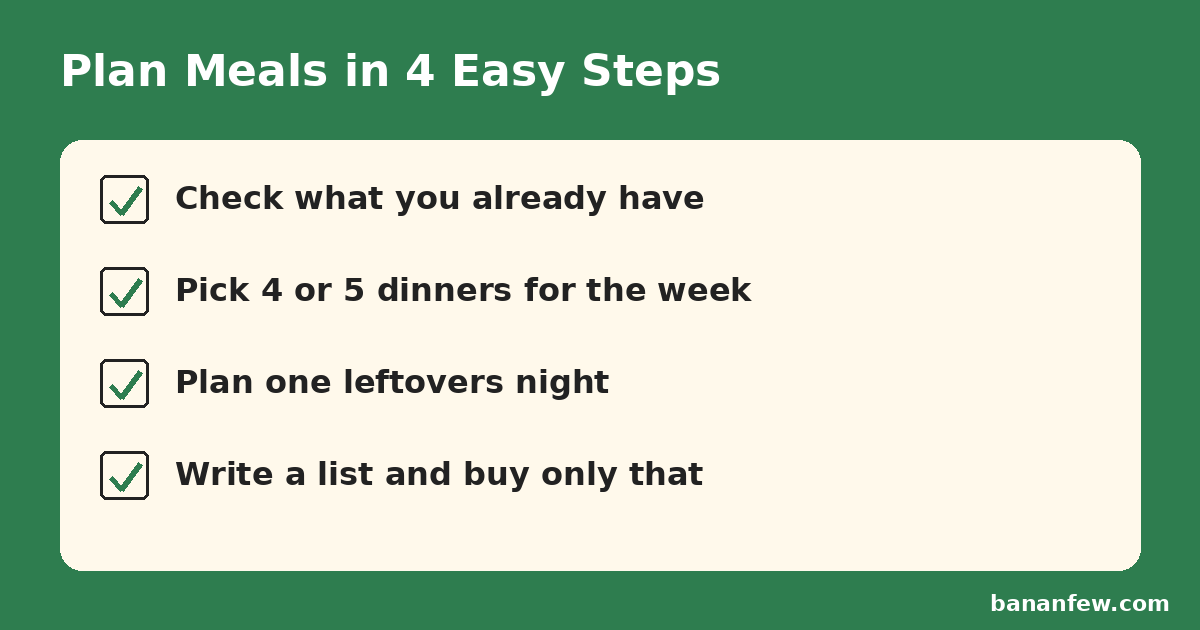
Step 1: Shop your kitchen first. Open the fridge, freezer and pantry. Write down anything that needs to be used soon and any staples you already have, like rice, pasta, beans or frozen vegetables.
Step 2: Pick four or five dinners. Build them around what is on that list. You don’t need seven new recipes. Most people do fine with a few meals they already know how to make.
Step 3: Plan one leftovers night. Pick a night, often Thursday or Friday, where you eat whatever is left. That one habit stops a lot of food from going to waste.
Step 4: Write the list and stick to it. Write down only what those meals need, plus breakfast and lunch basics. Group the list by store section so you are in and out faster.
If you plan to cook once and eat twice, a set of glass meal prep containers makes leftovers easy to stack and grab for lunch.
Stretch One Ingredient Into Several Meals
The cheapest meal plans reuse the same base ingredient in different ways. You buy one bigger item, which often costs less per pound, and spread it across the week.
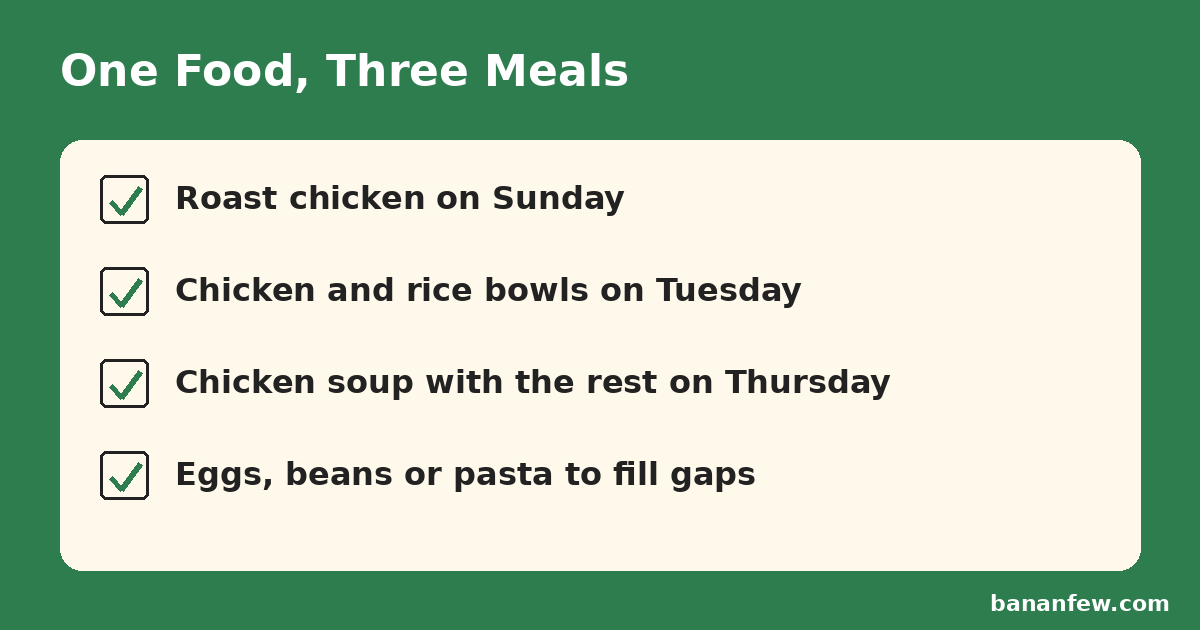
For example, roast a whole chicken on Sunday. Use some of the meat for chicken and rice bowls on Tuesday. Turn the rest into soup on Thursday. Eggs, beans and pasta fill the other nights for very little money.
The same idea works with a big pot of chili, a bag of rice or a tray of roasted vegetables. If you don’t eat meat, try a pot of lentils or black beans as your base.
Shop Smarter With Your List
A plan only saves money if the list makes it to the store with you. A few small habits help it stick.
- Eat before you shop. Shopping hungry makes snacks look like a good idea.
- Check unit prices. The small label on the shelf shows the price per ounce or pound, so you can compare sizes and brands quickly.
- Try the store brand. For basics like flour, canned tomatoes and frozen vegetables, store brands often cost less.
- Leave room for one swap. If something on your list is far more than you expected, swap it for a cheaper item that fits the same meal.
Then look at your receipt during your 10-minute weekly money check-in. Seeing the total each week shows you whether the plan is working. If you find room in the budget, it can go toward your first $1,000 emergency fund or a debt you are paying off.
What to Do When the Plan Falls Apart
Some weeks will go sideways. A late night at work or a sick kid can knock out two planned dinners.
Keep two or three backup meals in the freezer or pantry, like pasta with jarred sauce or eggs and toast. They cost less than takeout and take about 15 minutes.
If you skip a planned meal, move it to the next week instead of buying new food. Freeze anything that will not keep. The goal is not a perfect week. The goal is spending less than you would without a plan.
This post is for general education, not personal financial advice. Food prices and savings vary by store, location and household.
Your Start-Today Checklist
- Pick one planning time each week and put it on your calendar.
- Write down what is already in your fridge, freezer and pantry.
- Choose four or five dinners and one leftovers night.
- Write a short grocery list grouped by store section.
- Keep two cheap backup meals on hand.
- Check your grocery total at your weekly money check-in.
Start with this week’s dinners. Twenty minutes with a notepad today can mean fewer trips, less waste and a smaller grocery bill by Sunday.