This post contains affiliate links. As an Amazon Associate, bananfew earns from qualifying purchases.
Your heating bill can jump the first cold month of the year and quietly wreck a budget that worked fine all fall. The good news is you can lower your heating bill with a few cheap fixes and small habits, most of which take an afternoon or less.
Key takeaways
- The thermostat is the biggest free lever: a lower setting while you sleep or are away adds up over a whole winter.
- Drafts around doors and windows leak heat you already paid for, and the fixes are cheap.
- Plan for winter bills ahead of time so a high month doesn’t land on a credit card.
Start With the Thermostat (It’s Free)
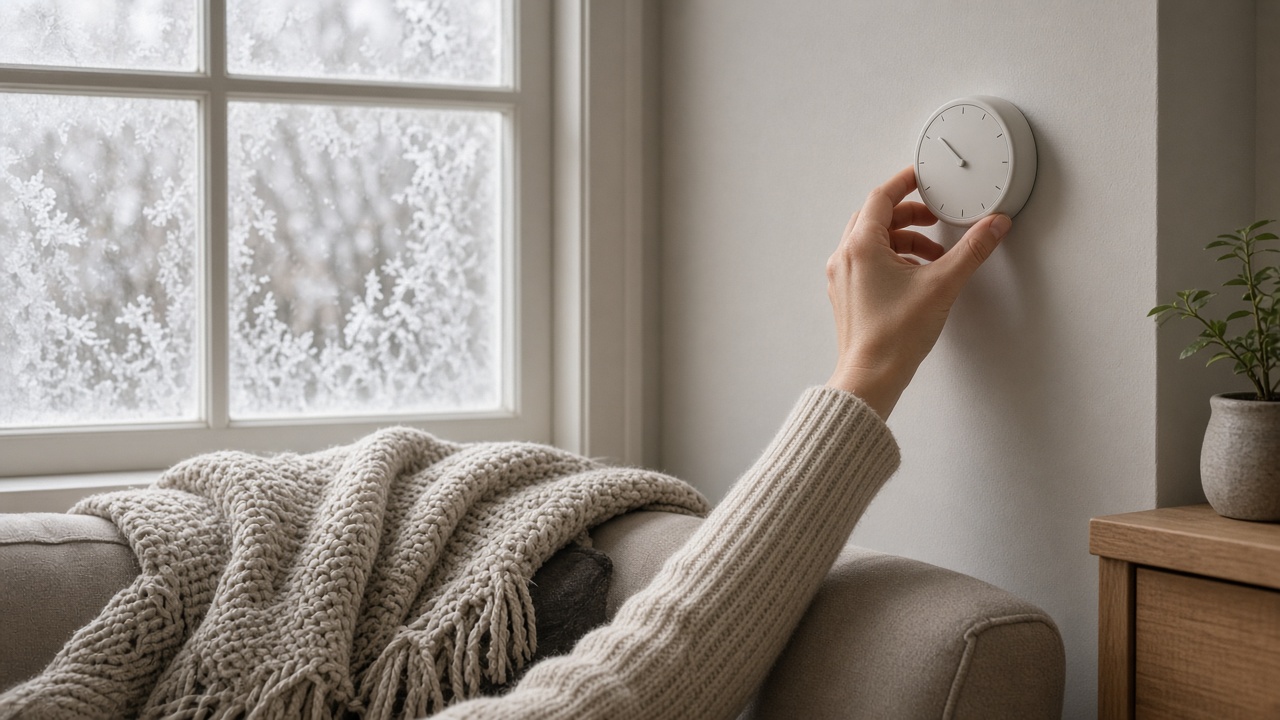
Heating can make up almost half of a typical family’s winter energy bill, according to the U.S. Department of Energy’s home energy checklist. So small changes here go a long way, and you don’t need a fancy device to start.
The DOE’s Energy Saver guide says you can save as much as 10% a year on heating and cooling by turning your thermostat down 7 to 10 degrees for 8 hours a day in the fall and winter. Nighttime and workdays are the easy windows for that.
Here’s a simple way to try it:
- Pick your daytime number. Try 68°F and add a sweater before you touch the dial.
- Set back at night. Drop it a few degrees when you go to bed and use an extra blanket.
- Set back when you leave. If no one is home during the workday, there’s no reason to heat an empty house.
One note: if you have a heat pump, the same DOE guide says not to do big setbacks unless you have a smart or programmable thermostat made for heat pumps, because a setback can kick on pricier backup heat. With a heat pump, a steady, moderate setting is usually the better move.
Block Drafts Around Doors
A gap under a door is like leaving a small window open all winter. Warm air slips out, cold air slides in, and your heater runs longer to keep up.
Here’s a quick test. On a windy day, hold your hand or a lit incense stick near the bottom and edges of each outside door. If you feel cold air or the smoke wavers, you’ve found a leak.
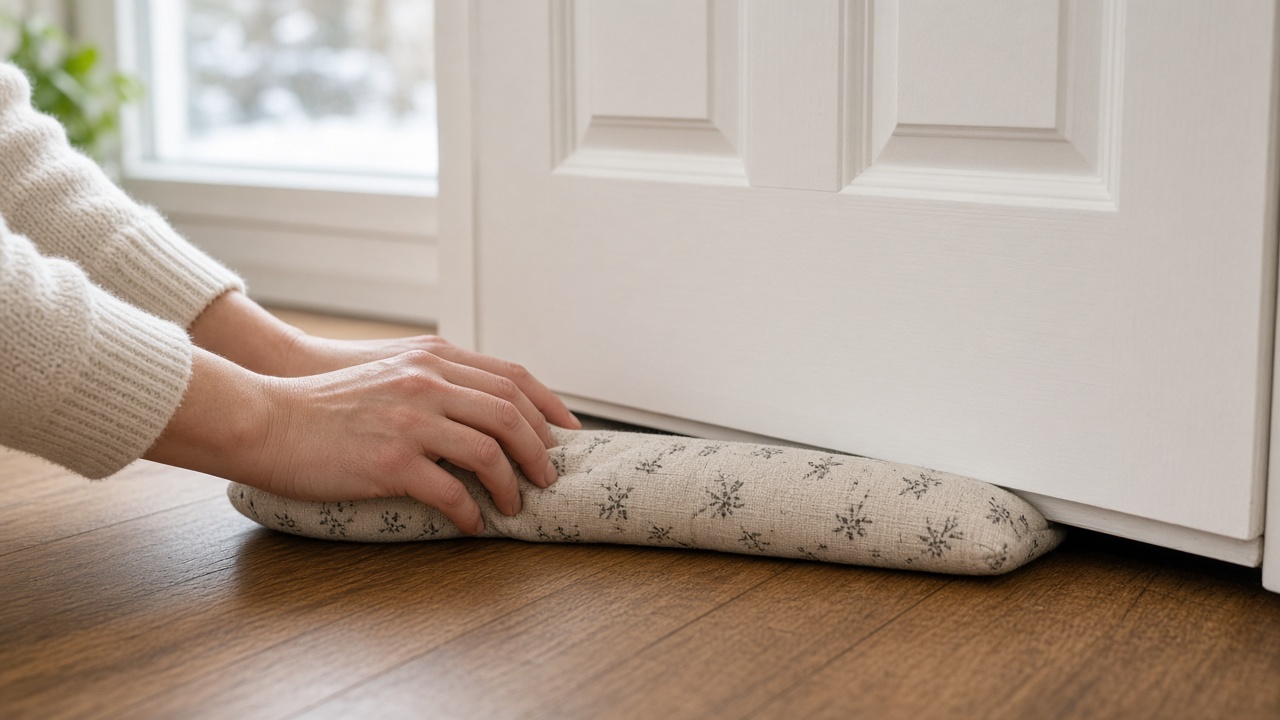
The cheapest fix is a rolled towel at the bottom of the door. A step up is an under-door draft stopper that slides on and moves with the door, which works well for renters since nothing gets glued or screwed in.
Check the sides and top of the door too. Worn weatherstripping there can be replaced with a peel-and-stick strip from any hardware store.
Seal Up Drafty Windows
Older windows lose a lot of heat, especially single-pane ones or frames that don’t close tight. Replacing windows is expensive, but you don’t have to.
- Lock every window. Locking pulls the sashes tighter together and can close small gaps.
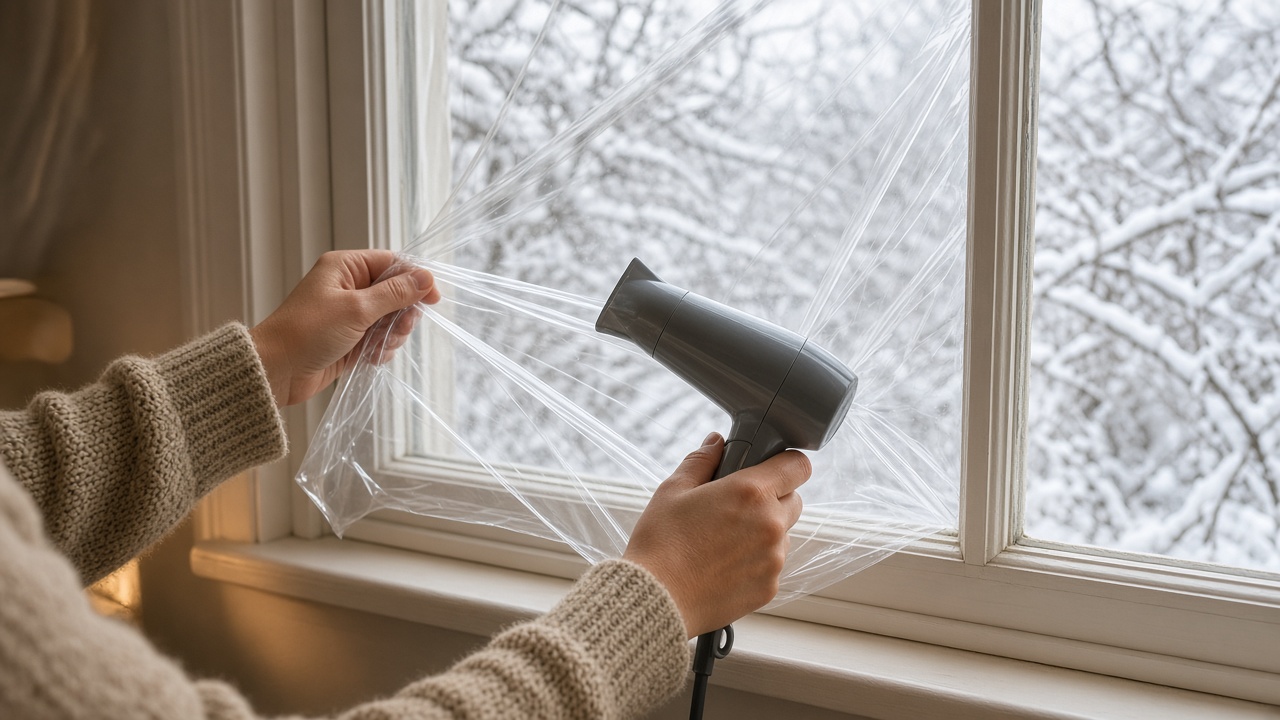
- Use window film. A clear shrink film window kit goes on with tape and a hair dryer and comes off in spring. It adds a layer of still air between you and the cold glass.
- Close curtains at night. Open them on sunny days to let the sun warm the room for free, then close them after dark to hold the heat in.
Start with the room you use most, like the living room or bedroom. You’ll feel the difference there first.
Small Habits That Keep Heat Where You Want It
None of these cost money. Together they help your heater do less work.
- Close vents and doors in unused rooms only if your system allows it. Some systems run better with every vent open, so check your manual first.
- Change or clean your furnace filter. A clogged filter makes the system work harder. Many need a look every one to three months.
- Don’t block vents or radiators with couches or long curtains.
- Run ceiling fans clockwise on low. This gently pushes warm air from the ceiling back down.
- Dress for the season indoors. Warm socks, slippers and a throw on the couch let you keep the thermostat lower without feeling it.
Plan for Winter Bills Before They Hit
Even after these fixes, a cold January can still bring a bigger bill. The goal is to see it coming so it doesn’t end up on a credit card.
Here’s a sample, not real numbers. Say your heating bill runs about $80 in fall and $180 in your coldest months. That’s an extra $100 a month for about three months, or $300 to plan for.
- Look at last winter. Most utilities show 12 months of past bills online. Find your highest month so you know what to expect.
- Ask about budget billing. Many utilities offer a plan that spreads your yearly cost into equal monthly payments. Call and ask if yours does.
- Start a small sinking fund. Put aside a little each month for winter bills. Here’s how sinking funds stop surprise bills.
- Put the due date on your calendar. A simple bill calendar helps you avoid late fees on top of a bigger bill.
If you’re struggling to pay for heat, call your utility before you fall behind and ask about payment plans. You can also look into the federal Low Income Home Energy Assistance Program (LIHEAP), which helps eligible households with heating costs.
Any money you save each month can go to work too. Add it to your first $1,000 emergency fund or put it toward debt with the Debt Destroyer Planner.
This post is for general education, not personal financial or home-repair advice. Savings will vary by home, climate and heating system.
Your Start-Today Checklist
- Set your thermostat to 68°F while you’re home and lower at night.
- Do the hand test on every outside door and window.
- Block the worst door gap with a towel or draft stopper.
- Seal or cover your draftiest window.
- Check your furnace filter.
- Look up last winter’s highest bill and ask your utility about budget billing.
Pick one item and do it today. A warmer house and a smaller bill usually start with the door you already know is drafty.
Leave a Reply