This post contains an affiliate link. As an Amazon Associate, bananfew earns from qualifying purchases.
Most money leaks don’t come from one big mistake. They come from the “it’s only $25” buys that show up when a sale email lands or you’re scrolling late at night, and a simple 48-hour rule is one of the easiest ways to stop impulse buying without giving up the things you really want.
Key takeaways
- The 48-hour rule is simple: when you want something you didn’t plan for, write it down and wait two days before you buy it.
- A short wait list in your phone or a pocket notebook turns “I need this now” into a calm yes or no.
- Cutting the triggers, like sale emails and saved cards, does as much work as willpower.

Why Impulse Buying Adds Up So Fast
An impulse buy is anything you didn’t plan to buy before you saw it. A phone case, a kitchen gadget, a second hoodie in a different color.
Each one feels too small to matter. The trouble is that they repeat, and they rarely show up in a budget because you never planned for them.
Here’s a sample, not a real budget. Say you make three unplanned buys a week at about $20 each.
That’s $60 a week, or roughly $3,120 a year. If even half of those would fail a two-day wait, that’s about $1,560 you could send to savings or a credit card instead.
How the 48-Hour Rule Works
The rule has one step: you don’t buy anything unplanned on the same day you first want it. You wait 48 hours, then decide.
That’s it. You aren’t saying no. You’re saying “not yet,” which is much easier to stick with.
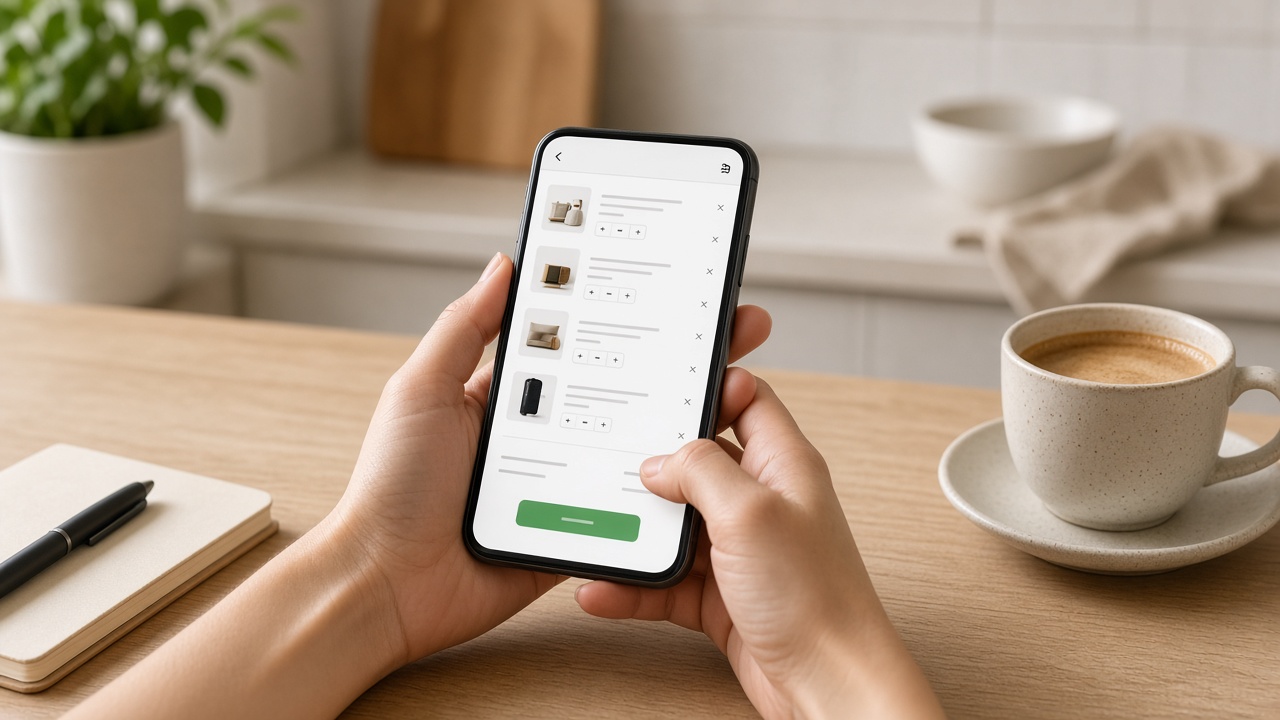
Step 1: Write it down. Add the item, the price and today’s date to a wait list. A notes app works, or a small pocket notebook you keep in your bag or by your laptop.
Step 2: Close the tab or walk away. Don’t leave it sitting in your cart. Carts are built to pull you back.
Step 3: Check the list after two days. Ask three quick questions. Do I still want it? Do I know where it will go or when I’ll use it? Can I pay cash for it without touching savings or bill money?
Step 4: Decide on purpose. If all three answers are yes, buy it and enjoy it. If not, cross it off.
A lot of people find that most items on the list feel boring by day two. The want was real in the moment, but it passed.
Set Your Own Wait Times
Forty-eight hours is a good default, but you can scale it to the price. Bigger purchases deserve a longer pause.
- Under $50: wait 48 hours.
- $50 to $200: wait one week.
- Over $200: wait 30 days and check that it fits your budget before you buy.
Pick numbers that fit your income. The point is to have the rule decided ahead of time, so you aren’t making it up while a “sale ends tonight” banner is flashing.
Planned things don’t need to wait. Groceries on your list, a bill, or a gift you budgeted for are already decided. If you use a simple cash envelope system, anything that fits inside an envelope you already filled can skip the wait.

Cut the Triggers Before Black Friday
Willpower gets tired. It’s easier to remove the nudges that start most impulse buys in the first place, and late November is the best time to do it.
- Unsubscribe from store emails. Spend 10 minutes this week unsubscribing from every shop that emails you more than once a week. You can still visit the site when you need something.
- Remove saved cards. Delete your card from shopping sites and apps. Typing the number in by hand adds a small pause, and that pause helps.
- Turn off shopping app alerts. Price-drop and “back in stock” alerts are designed to make you buy now.
- Shop with a list. Before Black Friday, write down the few things you actually planned to buy and a total you’re willing to spend. Anything not on the list goes to the wait list.
If your holiday budget isn’t set yet, start with how to plan holiday spending without debt. It pairs well with the 48-hour rule.
And while you’re cleaning up, it’s a good time to find and cancel unused subscriptions. Many of those started as impulse sign-ups too.
Give the Money You Didn’t Spend a Job
Skipping a buy only helps if the money actually goes somewhere. Otherwise it tends to drift into the next purchase.
Once a week, look at what you crossed off your wait list and add it up. Then move that amount on purpose.
If you don’t have a cushion yet, send it toward your first $1,000 emergency fund. If you’re paying down debt, put it toward your next payment. The Debt Destroyer Planner can help you see which debt it should go to first.
Your 10-minute weekly money check-in is a natural time to do this. It also shows you patterns, like which store or time of day keeps showing up on your list.
This post is for general education, not personal financial advice. Savings will vary by household.
Your Start-Today Checklist
- Start a wait list in your phone or a small notebook.
- Pick your wait times: 48 hours, one week and 30 days.
- Unsubscribe from three store emails today.
- Remove your saved card from one shopping app.
- Write your planned Black Friday list and a spending limit.
- Add up crossed-off items each week and move that money to savings or debt.
Try it with the very next thing you want to buy. Write it down, wait two days, and see how often the answer turns into “I’m good.”
Leave a Reply