This post contains an affiliate link. As an Amazon Associate, bananfew earns from qualifying purchases.
If your card balance always surprises you at the end of the month, the problem usually isn’t one big purchase. It’s a lot of small swipes you don’t feel, and a simple cash envelope system makes those swipes visible again.
Key takeaways
- A cash envelope system puts a set amount of cash into a few labeled envelopes, and when an envelope is empty, that category is done until the next refill.
- You only need envelopes for the two or three categories where you tend to overspend, not your whole budget.
- Bills, savings and debt payments can stay automatic while cash handles the everyday spending.
What a Cash Envelope System Is (and Why It Works)
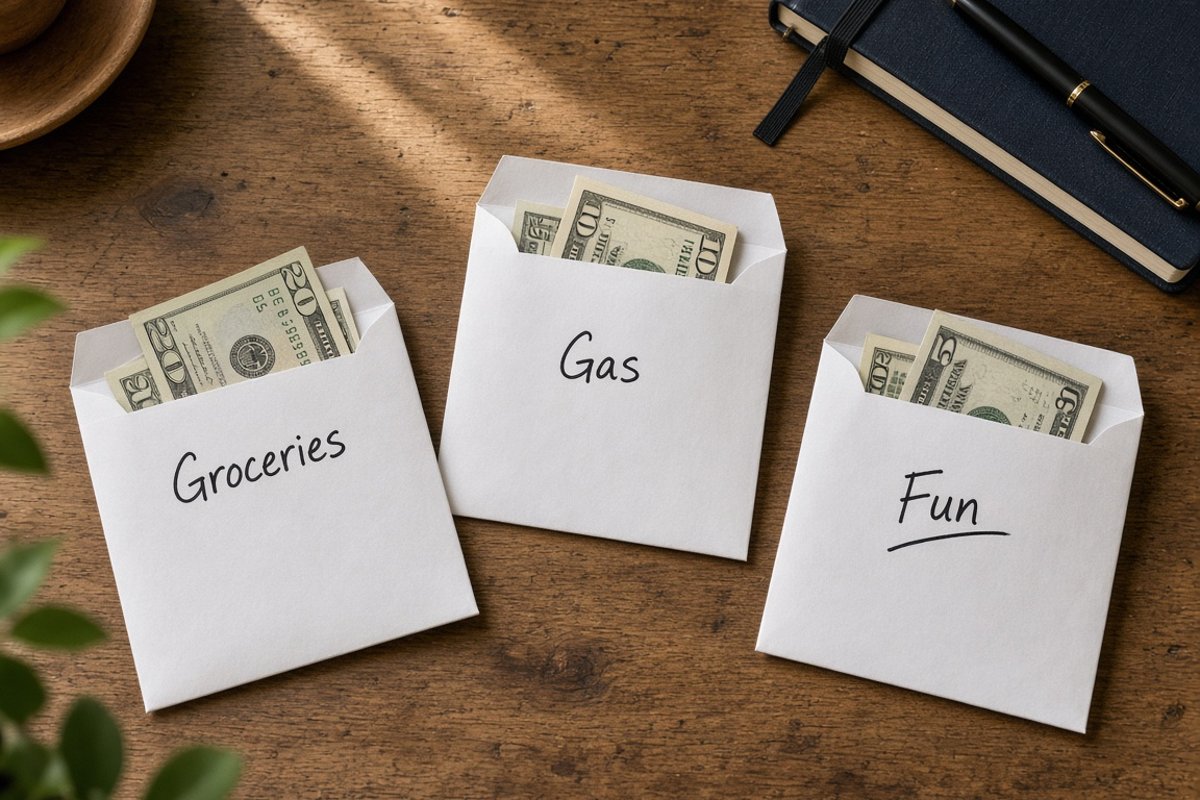
The idea is old and plain. On payday, you take out cash for a few spending categories, like groceries, gas and fun money. Each category gets its own envelope with a set amount inside.
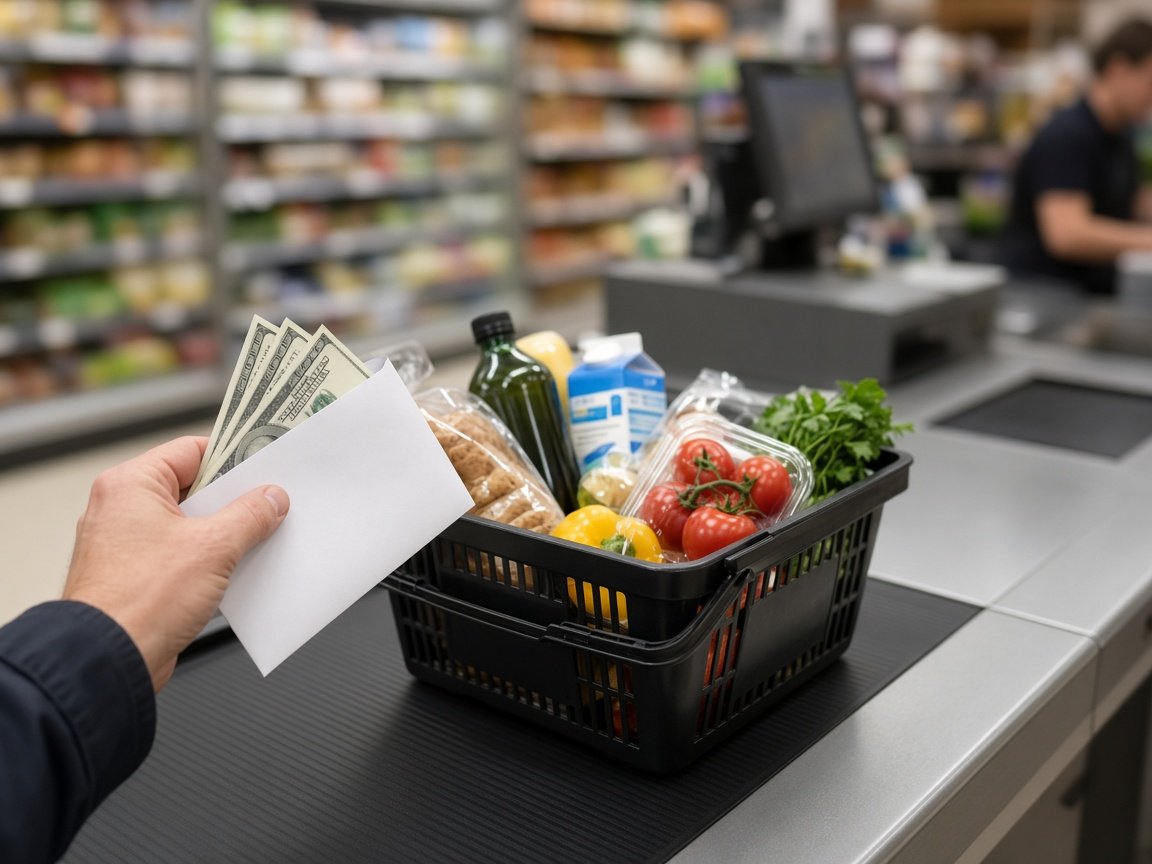
When you buy groceries, you pay from the grocery envelope. When it’s empty, you stop spending in that category or move money over from another envelope on purpose.
It works because cash is easy to see. A card feels the same whether you have $400 left or $4. An envelope with two $10 bills in it tells you exactly where you stand before you reach the register.
Here is a sample, not a real budget. Say you plan $120 a week for groceries and usually spend about $150 by card.
With $120 in an envelope, you see the money run low by Thursday and plan a pantry dinner instead of a third trip. That’s $30 a week you didn’t spend, or roughly $1,560 over a year if it holds.
How to Set Up Your Cash Envelopes in 20 Minutes
You don’t need a fancy kit to start. Plain envelopes and a pen are enough for the first month.
Step 1: Look at last month’s spending. Open your bank or card statement and add up what you spent on groceries, gas, eating out and other everyday stuff. This gives you real numbers instead of guesses.
Step 2: Pick two or three categories. Choose the ones where you overspend most often. For many people that’s groceries, eating out and “fun” spending like shopping or hobbies.
Step 3: Set an amount for each one. Start close to what you actually spend, then trim a little. Going from $300 to $150 in one month usually ends with an empty envelope on day eight and giving up.
Step 4: Match the refill to your payday. If you’re paid every two weeks, fill the envelopes every two weeks. If cash for a full month feels like too much to carry, split it into weekly amounts.
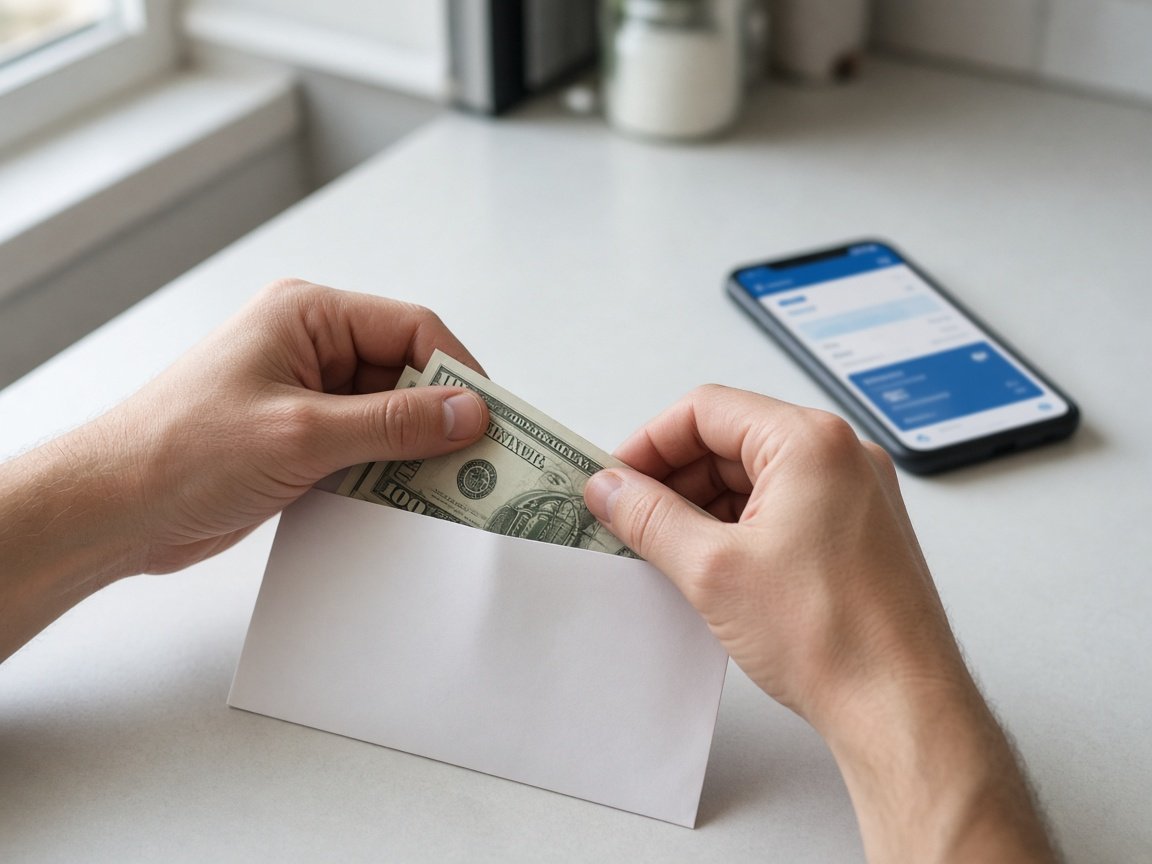
Step 5: Label and fill them. Write the category and the amount on each envelope. Some people keep a small note inside to jot down each purchase.
If you’d rather not use loose paper envelopes, a small budget binder with zipper cash envelopes keeps everything in one place and comes with spending sheets.
What Stays on Autopilot
A cash envelope system is for everyday spending. It isn’t meant for rent, utilities or your phone bill.
Keep fixed bills on automatic payments from your checking account. A simple bill calendar helps you line those due dates up with payday so the cash you pull out never belongs to a bill.
Savings and debt payments should stay automatic too. If you’re building your first $1,000 emergency fund or paying down a card, set that transfer up first. Then fill your envelopes with what’s left for spending.
Yearly costs like car registration or holiday gifts fit better in sinking funds held in a savings account than in a stack of cash at home.
Using Envelopes When You Mostly Pay by Card
Some stores and bills don’t take cash, and carrying a lot of it isn’t always safe. You can still use the same idea.
- Keep only one or two envelopes in cash. Groceries and fun money are the easiest to start with. Everything else stays on your debit card.
- Use a digital envelope. Some banks let you split your checking or savings into named buckets. Move each category’s amount into its own bucket on payday and spend only from that.
- Track it on paper. If you pay by card, write the purchase on the envelope and subtract it. When the number hits zero, that category is done.
- Keep cash safe. Don’t carry more than you plan to spend that week, and keep the rest at home in one place.
Check your envelopes during your 10-minute weekly money check-in. It’s the quickest way to see which category runs out first and adjust before the next payday.
What to Do When an Envelope Runs Out Early
It will happen, especially in the first month. That’s useful information, not a failure.
First, decide if the amount was realistic. If groceries run out every week, raise that envelope a little and lower another one to match. The total should still fit your income.
Second, borrow on purpose. Moving $20 from fun money to groceries is fine. Reaching for a credit card without thinking is the habit you’re trying to break.
And if there’s money left at the end of the period, give it a job. Roll it into next month, add it to savings, or send it to the debt you’re paying off. If you’re working through several debts, the Debt Destroyer Planner can show you where extra money goes furthest.
This post is for general education, not personal financial advice. Spending amounts and savings will vary by household.
Your Start-Today Checklist
- Add up last month’s spending on groceries, gas, eating out and fun.
- Pick two or three categories for envelopes.
- Set an amount for each, close to what you spend now, then trim a little.
- Keep bills, savings and debt payments automatic.
- Fill your envelopes on your next payday.
- Check them at your weekly money check-in and adjust.
Start small with one envelope this payday. Seeing exactly what’s left before you spend is often all it takes to start saving money and stop the end-of-month surprise.
Leave a Reply